
a站被罚12万元
Chinese scientists develop electrode coating to address signal loss and tissue adhesion problems in long-term brain-computer interface implantation_我的网站

一 | AI摘要 永泰县塔山革命烈士陵园提升改造工程近日竣工。

二 |
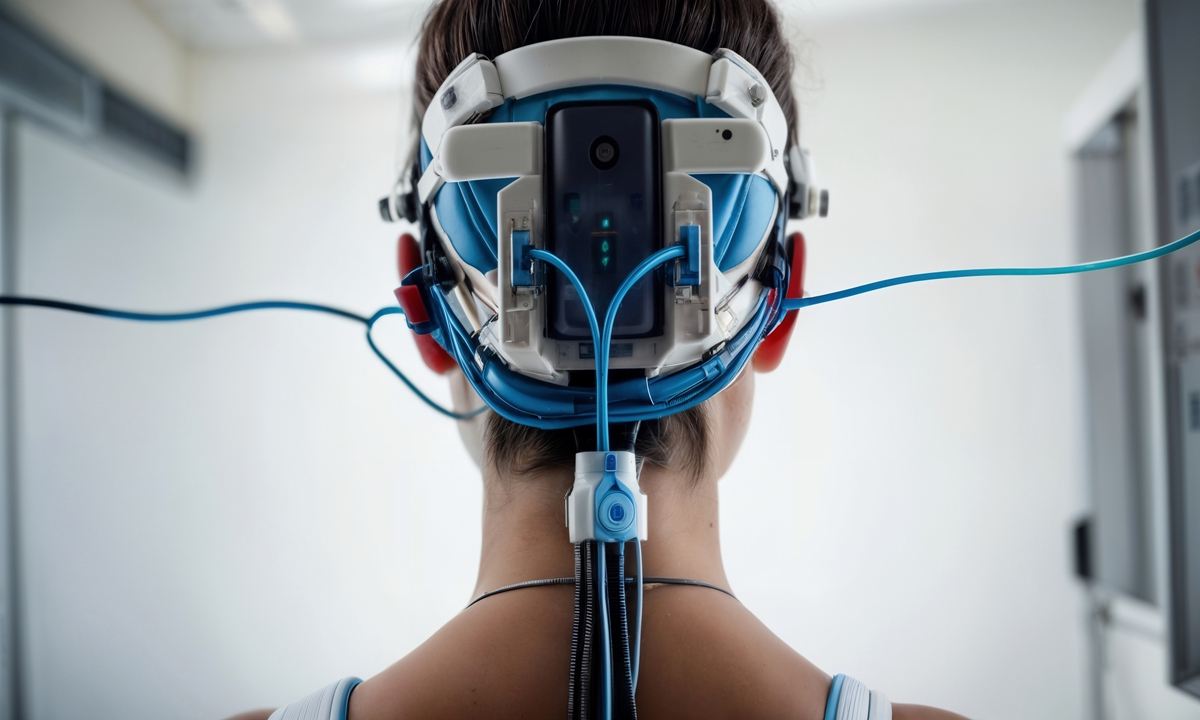
Chinese researchers have developed a multifunctional electrode coating that addresses key challenges in long-term brain-computer interface (BCI) implantation, including signal loss and tissue adhesion, bringing BCI one step closer to clinical application, the Global Times learned from the research team behind the findings on Sunday.
As an emerging field combining neuroscience and artificial intelligence (AI), BCI faces a major challenge of ensuring long-term compatibility between electrodes and brain tissue. Previous clinical trials showed that immune responses could cause implanted electrodes to retract after just three months, severely reducing signal quality and the number of available channels.
This problem stems from chronic inflammation triggered by implants, which creates insulating scar tissue around electrodes and separates them from neurons. Irreversible adhesion between electrodes and brain tissue after long-term implantation also makes device removal risky, potentially causing brain injury during follow-up surgeries.
Experiments showed that flexible neural electrodes coated with this material could operate stably in the brain for more than 300 days and could be safely removed without causing damage. This means the universal coating technology can make electrodes not only operate stably over the long term but can also be safely removed and replaced after aging, paving the way for long-term BCI applications.
Developed by the research team led by Zhang Wei at the Technical Institute of Physics and Chemistry, Chinese Academy of Sciences, associated with Beijing Tiantan Hospital, Shanghai Institute of Microsystem and Information Technology and NeuroXess, a high-tech life science company specializing in BCI technologies, the cationic alternating peptide electrode coating preserves electrode flexibility and conductivity, while offering antibacterial, anti-protein adsorption and immune-rejection-inhibiting functions.
A 300-day animal study showed the coating's effectiveness. Bare electrodes experienced a sharp loss of recording capability after 90 days of implantation and could barely detect neuronal signals after 300 days. In contrast, coated electrodes maintained stable recording channels and consistently captured neural signals above 155 microvolts.
In terms of neural modulation, after 300 days of implantation, conventional electrodes required a current of 100 microamps to induce weak limb responses, while coated electrodes triggered clear movements with only 2 microamps, improving modulation efficiency by 50 times.
Notably, the removal tests highlighted a key advantage of the coating that electrodes no longer form irreversible bonds with brain tissue. In the experiments, the coated electrodes were removed intact, with minimal damage to the surrounding brain tissue, Zhang told the Global Times on Sunday.
。

三 | 项目优化基础设施与服务功能,拓宽步道与广场,增设防护栏杆、防滑设施及烈士事迹石碑,系统性改善了园区环境与纪念氛围。 记者从永泰县退役军人事务局获悉,塔山革命烈士陵园提升改造工程近日全面竣工。园区整体面貌、基础设施、服务功能得到系统性优化升级。 据悉,本次提升改造坚持尊重历史原貌、突出纪念主题、兼顾实用功能的原则,聚焦设施老化、功能短板、环境风貌等突出问题,实施系统化修缮。 改造后,上山步道拓宽至2.5米,步道两旁栽种花木并设置白色栅栏,沿路增设烈士事迹石碑;所有临坡路段加装青石防护栏杆;烈士墓广场三面拓宽翻新,大幅提升场地承载容量;园区所有台阶完成规整处理,并增设防滑设施。

四 | (记者 肖远强 通讯员 王滨淋)。
Current article:http://q72g6q.ruwentaqintiaozhupapaigai.shop/news/20260826_464.html
Published on:05:13:07